ISO 31000 Certification
ISO 31000 Risk Management Certification — Globally Recognized Standard for Enterprise Risk


2000
Happy Clients

1500
Expert Advisors

2+
Branch Offices
Free Consultation by Expert
.png)


.png)
.png)
ISO 31000 Certification in India — Benefits, Process & Cost
What is ISO 31000 Certification? |
|
|
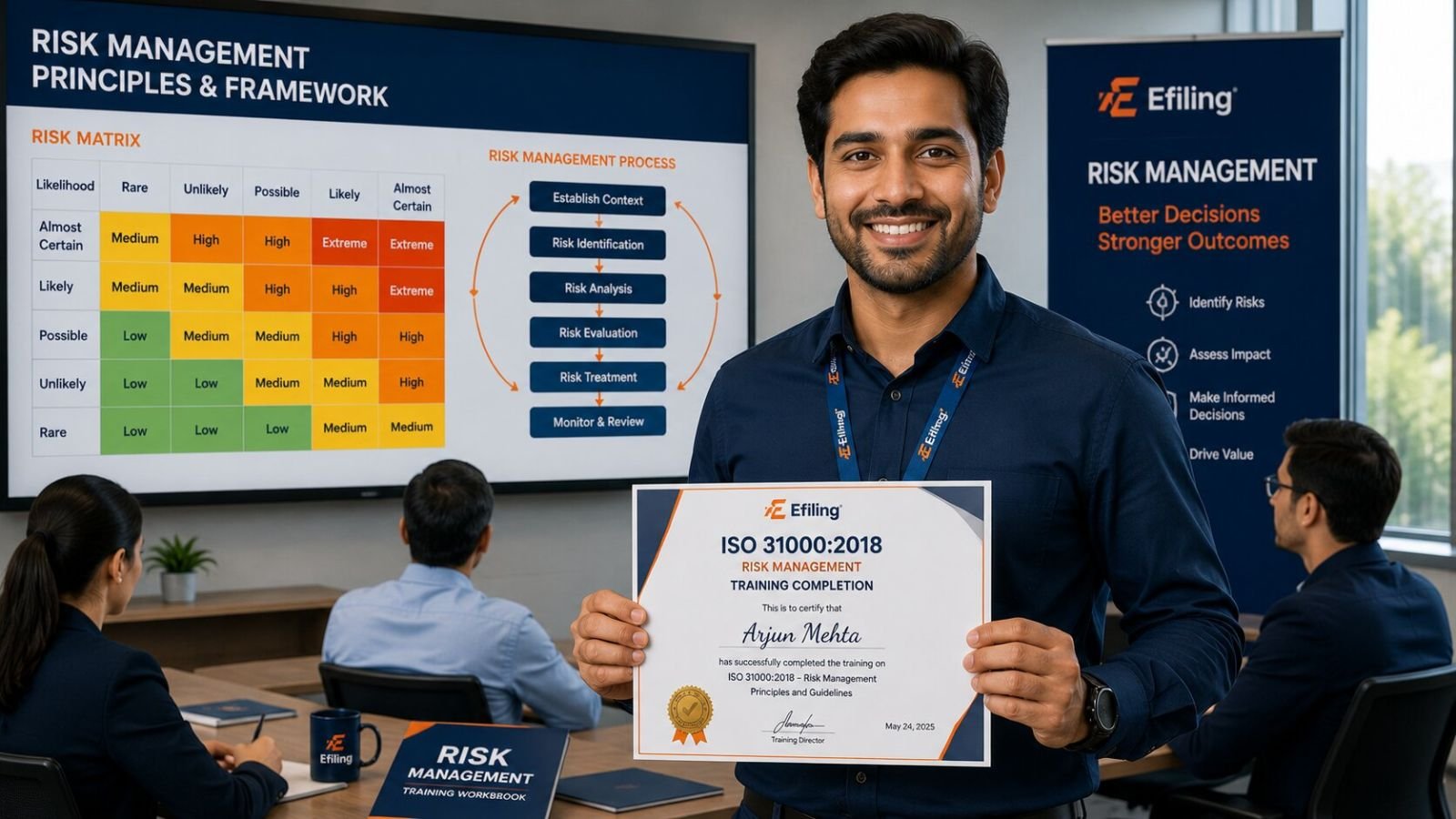
ISO 31000 is an international standard developed by the International Organization for Standardization (ISO) that provides principles, a framework, and a process for managing risk across any organization, regardless of industry or size. The current version, ISO 31000:2018, was published to align risk management with modern organizational practice and integrate it into all business functions. Unlike ISO 9001 or ISO 27001, ISO 31000 is a guidance standard — organizations cannot obtain official third-party certification against it. However, individual professionals can earn globally recognized ISO 31000-based credentials such as Certified ISO 31000 Risk Manager, ISO 31000 Lead Risk Manager, or ISO 31000 Risk Management Professional through accredited bodies including PECB, GSDC, Exemplar Global, GAQM, and BSI. For Indian businesses, aligning operations with ISO 31000 demonstrates a structured approach to risk that satisfies investor expectations, regulatory requirements, and global client demands. |

Expertise in ISO 31000 Certification

Enquiry Form
Among Asia Top
100
Consulting Firm

Get Consultation
Lowest Fees
100,000 + Clients.

Service Delivery
4.9 Customers Rating
50+ Offices
Contact us today to schedule your appointment.
You can call us on +919953004880 or write to us at info@efilingcompany.com
The 8 Principles of ISO 31000:2018 |
||
|
1. Integrated |
2. Structured & Comprehensive |
3. Customized |
|
4. Inclusive |
5. Dynamic |
6. Best Available Information |
|
7. Human & Cultural Factors |
8. Continual Improvement |
|
Key Benefits of ISO 31000 Certification |
|
|
For Individuals Globally recognized credential in enterprise risk management. Improves career prospects in banking, IT, insurance, healthcare, and manufacturing. Validates competence to implement and audit ISO 31000-aligned risk frameworks. Enhances professional credibility and earning potential. |
For Organizations Structured framework for identifying, analyzing, evaluating, and treating risks. Supports better decision-making at all levels. Reduces operational losses and unexpected disruptions. Builds investor, client, and regulatory confidence. Applicable across sectors — from startups to large enterprises. |
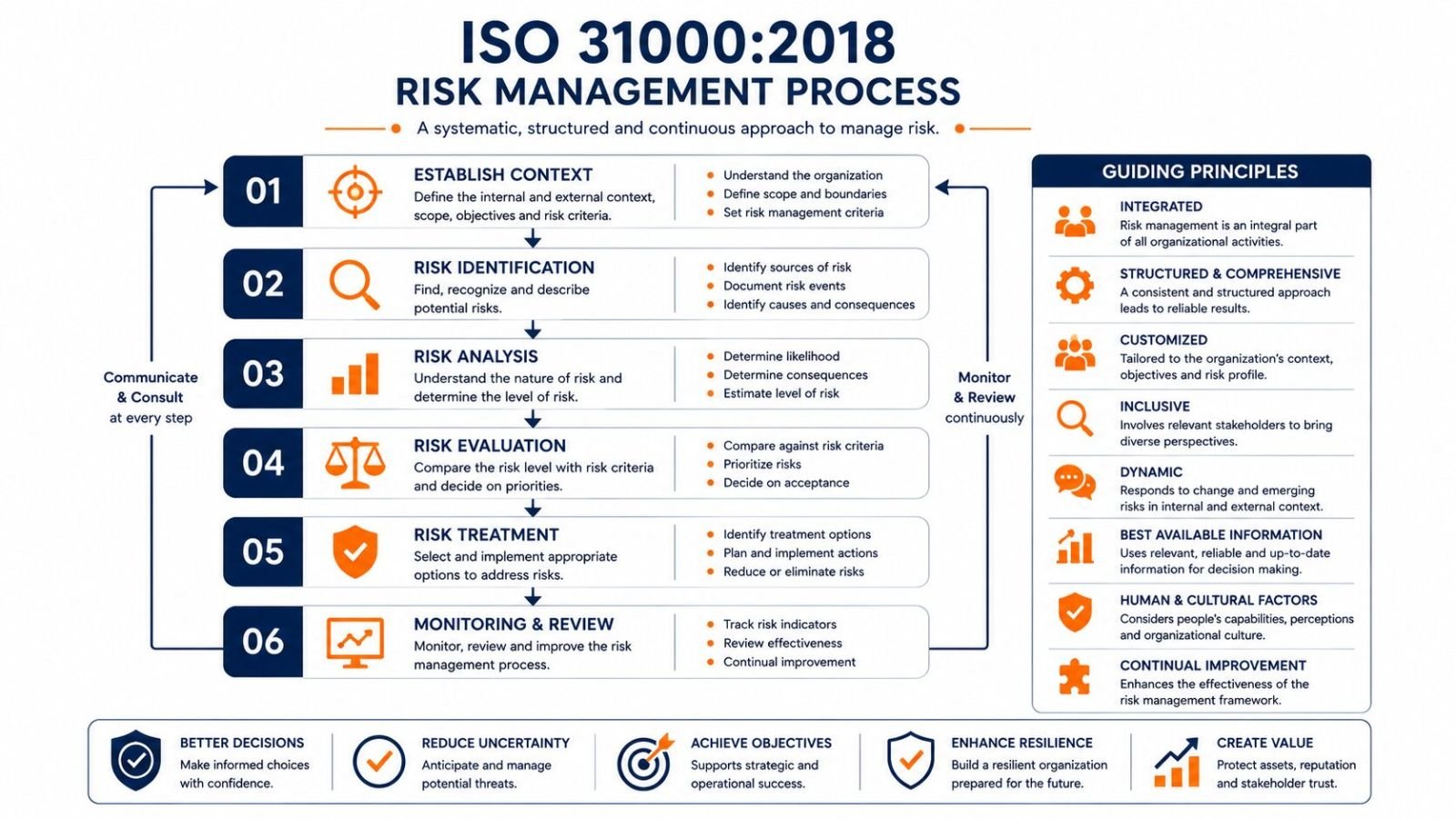
ISO 31000 Risk Management Process |
|||
|
1 Scope, Context & Criteria Define objectives, stakeholders, risk criteria, and the external & internal context. |
2 Risk Assessment Identify, analyze, and evaluate risks — likelihood, consequence, and overall risk level. |
3 Risk Treatment Select and implement options to modify risk — avoid, reduce, transfer, or accept. |
4 Monitoring, Review & Improvement Continuously monitor risks, review effectiveness, and improve the risk management system. |
Who Should Get ISO 31000 Certified? |
|
| Chief Risk Officers and Risk Managers Compliance and Governance Professionals Internal Auditors and Assurance Professionals Project Managers and Business Analysts |
IT and Information Security Managers Business Continuity Planners Management Consultants advising on risk frameworks Senior Management with strategic decision-making responsibilities |